Introduction
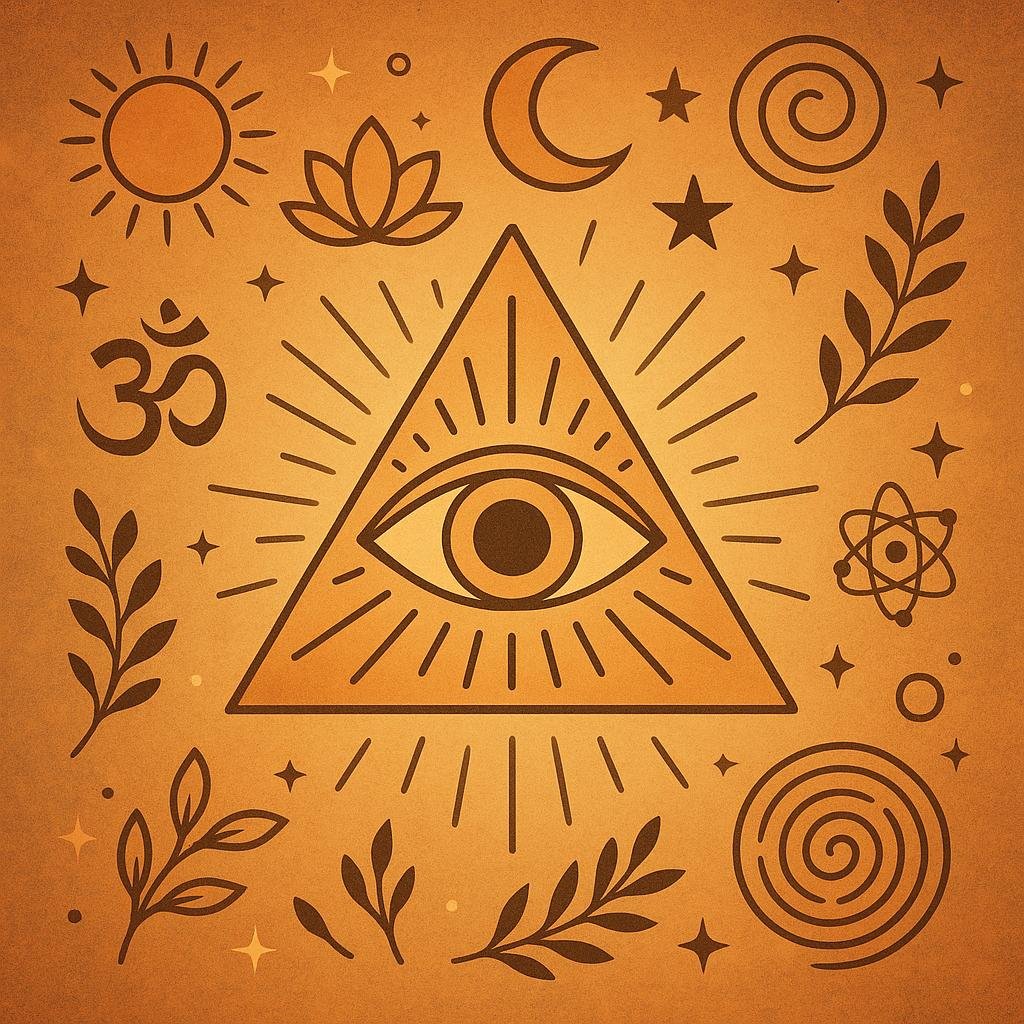
Symbols have a unique way of carrying stories, feelingsand meaning all at once. This article looks at why symbols have been used in spiritual practices for thousands of years-not as a timeline,but as a look at the roles symbols play. Whether carved, spoken, imaginedor worn, symbols help people connect with things that are big, unseenor hard to explain.
How Symbols Connect
A symbol stands for something beyond itself. It simplifies complex ideas into a form that’s easier to remember and share. Symbols give the mind a place to rest when ideas or emotions feel too vast or unclear. They bridge thought and feeling,stirring moods or intentions through a single image or phrase. What makes a symbol powerful is often its openness. It invites personal reflection while still holding shared meaning, letting people bring their own experience without losing the common thread.
Symbols in Rituals
Rituals use symbols to turn simple actions into something meaningful. Lighting a candle,wearing a mark,or arranging objects in a certain way signals that something special is happening. These repeated symbolic acts train attention and habit, so over time the symbol calls up particular feelings or behaviors. Rituals also give symbols a living context where their meaning is practiced and strengthened. Without that, symbols risk becoming abstract or losing their emotional impact.
Community and Memory
Symbols are social tools. Shared symbols become shorthand for group identity and collective memory. They carry stories and values that don’t need to be retold every time.This helps cultures pass down traditions across generations. At the same time, symbols can hold different meanings inside and outside a group, protecting a community’s inner life while linking it to the wider world.
Symbols and the Body
Spiritual symbols live not just in words but in the body and senses. Sounds, smells, gesturesand patterns engage senses in ways that words frequently enough can’t. A rhythm or scent can bypass thinking and connect directly to feeling. Practitioners frequently enough say symbols “work” as they shape attention, breathand posture, changing how someone experiences their inner life. That’s why many traditions combine symbols with movement, songor breathing exercises. The symbol becomes a tool for entering a certain state.
As symbols influence how we hold ourselves and feel, they can also shape ethics.Small, repeated symbolic actions slowly reshape habitsand those habits influence how someone responds to the world.
Teaching and Learning
Symbols help make abstract spiritual ideas easier to understand. Complex concepts like impermanence or unity become more approachable when linked to a clear sign or story. Symbols serve as teaching tools that simplify,preserve important points,and act as reminders during study or meditation. Since symbols can be worn, displayedor copied, they help learning continue outside formal settings.
They also work as memory aids. A pattern or simple mark can trigger longer teachings or sequences of practice, useful for both beginners and experienced practitioners.
Changing Meanings
Symbols last because they can carry many layers of meaning.Over time, a symbol gathers history, local interpretationsand personal associations, making it rich and flexible. This adaptability helps symbols stay relevant, though it can also cause tension when meanings shift quickly or clash between groups.
People can reclaim or reshape symbols, deciding which parts to keep or change to fit new times. This ongoing negotiation reflects culture in motion.
Everyday Impact
Symbols influence how people act and see the world. They mark important moments, guide behaviourand offer comfort or challenge. For individuals, a symbol might be a focus for meditation or a reminder of a commitment. For groups, it can coordinate actions, build trustor set boundaries. These simple roles show how symbols quietly shape spiritual life without needing grand explanations.
Conclusion
Symbols have been part of spiritual practices for thousands of years because they do so much: they condense complex ideas, focus attention, connect communitiesand engage both mind and body. Far from decoration, symbols are practical tools helping people live and learn within a spiritual framework. Their lasting power comes from being useful, socialand deeply personal all at once. Whether simple or complex, a symbol’s strength lies in how it holds meaning that can be seen, heard, feltand remembered-and through that, shapes how people think, feeland act.