
Introduction
When we talk about chakras,the focus often falls on individual points like the heart or the root. But looking at each chakra separately misses the bigger picture. The chakras aren’t just isolated energy centers-they’re part of a connected system where each one influences the others. What we experience as shifts in mood, creativityor clarity usually comes from how these centers interact, not from any one chakra alone.
Understanding the Chakra System
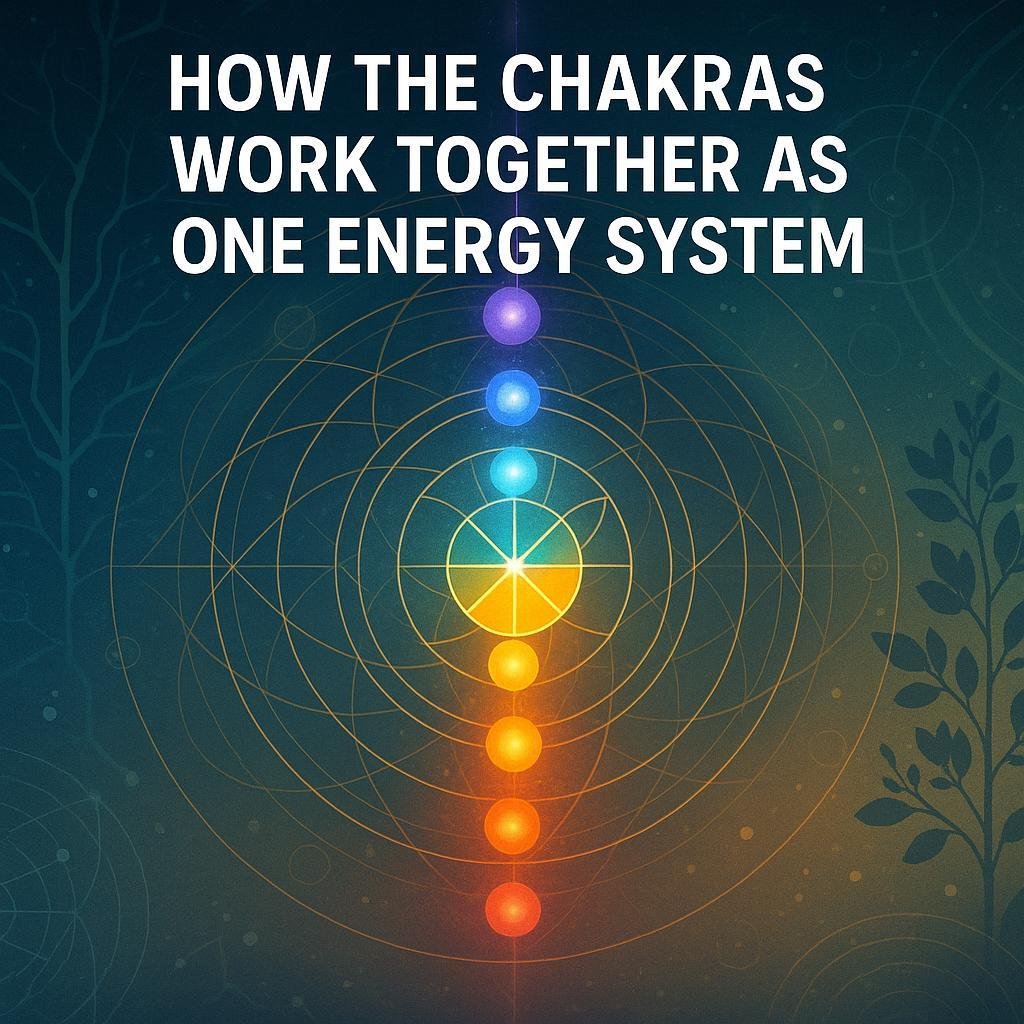
The most common way to describe chakras is as seven main centers aligned along the spine, from the base to the crown of the head. These centers correspond to different kinds of sensations and awareness: grounding and safety near the bottom, emotional and creative flow in the middleand higher awareness toward the top. Think of this model as a map or a symbolic language that helps you notice patterns in your experience. It’s not about anatomy but about tuning into how energy moves in your body.
How Chakras Interact
The chakras communicate in several ways. Physical movement and breathing create pathways for energy and information to flow up and down the body. Where you focus your attention or intention can change the whole system’s tone, like a tuning fork setting a vibration. Emotions and memories send currents through multiple centersand the nervous system translates those into sensations and behaviors. So rather than being isolated points, the chakras work together as parts of a dynamic, responsive field.
You can also notice this interaction by feeling ripple effects.For example, gaining clarity in the solar plexus might ease tension in your throat, making it easier to speak. Loosening tightness in your hips can release strain in your lower back and root chakra. These aren’t simple cause-and-effect steps but shifts in balance-when one chakra changes, the whole system adjusts.
Balance and Blockages
When your chakras are in harmony, energy flows naturally: grounding supports creativity, creativity opens you to connectionand connection deepens your awareness. Blockages frequently enough come from habits, neglector trauma. As an example, relying too much on intellectual control might tighten your upper chakras while leaving the lower ones neglected. Conversely, being stuck in survival mode can shut down curiosity and limit your broader experience.
It’s helpful to see these patterns as habits,not permanent flaws.The idea of “unblocking” is useful when it encourages curiosity and gentle action rather of blame.Paying attention to where you feel stuck, where your breath is shallowor where a thought keeps looping offers a way in. As the chakras depend on each other, even a small, gentle shift in one place can gradually restore balance across the whole system.
Bringing Awareness into Daily Life
In everyday life, the question of how chakras work together comes down to attention and practice. Simple habits like slow, mindful breathing that moves through your torso, gentle movement that opens several joints at onceor quiet reflection on your emotions can strengthen the connections between chakras. These practices don’t force the system into any fixed state; rather, they create space for its natural intelligence to emerge.
Speaking your feelings aloud, moving in response to inner impulsesor creating something with your body all help tie the centers together. Integration isn’t about pushing energy to one spot but inviting your whole self to respond, shifting focusand trying new ways of being.
Working with Resistance and Care
Resistance is a natural part of working with energy. Protective habits developed for good reasons and may have helped you through tough times. Approaching resistance with curiosity and kindness is more helpful than rushing to fix it. Small experiments-like softening a muscle while noticing your breath or trying a new tone with your voice-can reveal how one change affects the whole system. These are ways to learn your own language of energy rather than following a rigid formula.
Patience matters. Quick fixes might create temporary sensations but don’t usually change deep patterns. Over time, gentle, consistent practices help the chakras find new, healthier rhythms. The goal isn’t a perfect feeling but greater sensitivity, versatilityand a fuller ability to respond to life as it comes.
Conclusion
Understanding how the chakras work together as one energy system means paying attention to their relationships, not just their locations. Each chakra has its own qualities, but their true power shows when you notice how they influence each other. With steady, embodied attention-through breath, movement, soundor mindful awareness-the system learns to coordinate in new ways. This relational intelligence is the heart of chakra work: a living, shifting network that grows stronger the more you listen to it.
<img class="ximage_class" src="https://karanna.academy/wp-content/uploads/2026/10/image-title-Generate-high-resolution-71829.png" alt="Generate a high-resolution,visually compelling image that creatively interprets the theme encapsulated by this post title: "How the Chakras Work Together as One Energy System". The image should be versatile enough to fit various niches, from technology and lifestyle to nature and science. It should feature a central,
eye-catching element that abstractly represents the topic, surrounded by relevant, subtler motifs that provide context and depth. The composition should be balanced and aesthetically pleasing, with a harmonious color palette that complements the mood of the title. The artwork should be suitable for use as a captivating header image for a blog post.">

